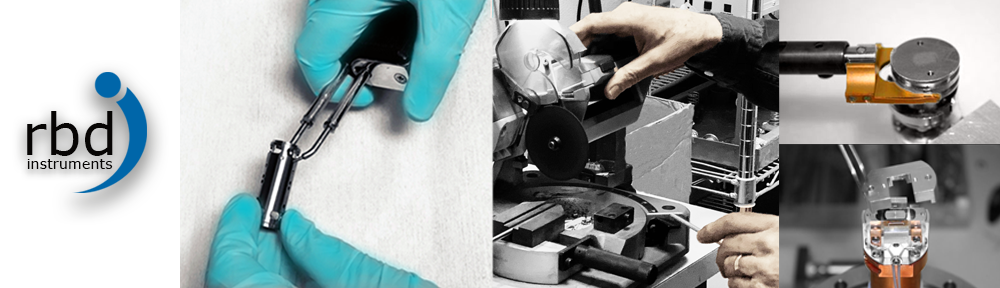

The PHI 5400 and 5600 LS (large sample) XPS systems and some of the 5600 and 5700 systems use motors to control the specimen stage via the system control software.
Over a period of many years, the motors can slow down or suddenly stop moving.
This blog post will show you how to possibly solve the problem.
The motors used on the PHI automated specimen stages are TRW precision fractional-horsepower motors. These motors are no longer made but you can sometimes find them on eBay.
In the example below, this motor was working fine and suddenly stopped moving. Lubricating the motor shaft solved the issue. If you have a PHI automated specimen stage where a motor is sluggish or stopped working, try lubricating it as shown below. If lubricating the motor does not solve the problem, then the motor might be bad and need to be replaced.
Procedure
Remove the defective motor from the specimen stage and set it on a flat surface with the white motor cover facing up.

Remove the white plastic cap (2 screws).

Using 3 in 1 oil, put a few drops onto the end bearing and let it soak in for 15 minutes. When the oil is complexly drained into the bearing, apply a few more drops and let it soak in for 15 more minutes. IMPORTANT! Do not use WD40. That may work short term but long term it will dry out the lubrication on the motor shaft and cause it to seize up.


Wipe off any excess oil and then replace the white plastic cap.
Connect the motor cable back up and test the motor using the software. Do not connect the motor to the specimen stage at this point.
If the motor now works, you can reconnect the motor. In the case of an LS system, you need to put the specimen stage into the bakeout position. Then manually set the repaired motor feedthrough to the bake out position and install the motor.
In the case of a 10-323 or 10-325 specimen stage, you need to set the stage to the correct position and set the motor to the correct position in the software before attaching the motor.
Read the blogs below for more information about your specific specimen stage.

Randy, William McNamara here; formerly at Sandia Nat. Labs (Phi Quantum and Phi Multi-Method XPS with G. Moore and Diane Peebles). I agree with avoiding WD-40, but could you explain how it “dries out” the lubrication on the shaft? Perhaps it is a better “surfactant” than the oil that it displaces. Not sure what you mean here.
Hi William,
Thank you for your question!
WD-40 contains a lot of solvents and a small amount of light oil. It tends to strip away the existing lubrication from whatever it’s applied to, leaving the parts “dry.”
WD-40 does leave a very thin layer of light oil on surfaces after the solvents evaporate, but those oils are better at protecting parts from moisture and oxygen than they are at providing adequate lubrication between moving parts–except in low stress, short-term applications.